Showing posts with label history. Show all posts

30 September 2023

Introducing New Newsletter “Portals to the Past”


It’s been a rare couple of months. First I inaugurate a History themed publication on the digital platform, Medium, and now I set up a Newsletter on Substack. Is it too much – or perhaps a dearth – of sunshine? Haven’t I enough filling my days? After all, there is such a thing as overcommitment. But which creative ever owns up to that?
 
The newsletter came about after I attended a Zoom talk by Substack, which was intriguing enough for me to explore the platform. Rather like Medium, it is a platform where subscribers  authors and readers – interact, mostly under publication banners, much as I’m building on Medium. The added bonus for subscribers to individual publications is that full posts are delivered as an email to their Inboxes.

Paying Subscribers? Much of the content is free, some behind personal author-paywalls – there are some very big hitters on Substack, from every career and walk of life.

My original intention was to use Substack for my fiction and keep Medium for non-fiction. But, while I worked out how to initiate this, I realised a writer can carry more than one ‘newsletter’.

The sharp-eyed may recognise the banner header image. It is part of the Ring of Brodgar standing stone circle of Orkney, a different aspect of the banner header to Escape Into History. It was chosen deliberately because I intend to use the same, or some of the same, history posts to reach a different audience.

At least, that’s the plan. 

Substack offers automated promotional images for posts for a range of media. The square one to the right is handy for use on Facebook and X/Twit. Taller versions are offered for Pinterest and TikTok.

But that's enough. As ever, the learning curve is steep  alas, it goes with the territory.

If you are curious enough to have a look, here's the link:      https://lindaacaster.substack.com/     

If not, see you next month.           

10 September 2023

Woodhenge - in the Stonehenge Sacred Landscape

20th century concrete pillars at Woodhenge. White, light blue, & red tops showing. Image by (c) Linda Acaster

What happened to August? In fact, where’s September disappearing to?

Normally regarded as ‘high summer’ in the UK, in late August Summer finally arrived. Friends visited, the vegetable and flower beds went into true English Country Garden mode (and with them the weeds), and we did a bit of travelling – back to Wiltshire.

This time we visited Woodhenge and Durrington Walls, both longstanding on my must-see list. They proved as fascinating as I’d hoped, as much because of the little that is known against what has been gleaned from recent archaeology. Both are within the World Heritage Site of the Stonehenge Sacred Landscape, and yes, we went to Stonehenge, too – in thick drizzle.

Woodhenge is the least known and most enigmatic of the three. It was discovered only in 1925 when early aerial photography showed rings of concentric darker spots in the dry vegetation not noticeable at ground level. Maud Cunningham, born 1869 and a pioneering archaeologist in the area, undertook the first investigation. She and her husband promptly bought the site to preserve it, in turn giving it to the nation.

Woodhenge, as it became known, is 160ft (50m) in diameter, though not quite a true circle. Within its outer bank and inner ditch (the henge) were found six rings of post holes which would have supported individual oak timber uprights. Different rings had posts of different thicknesses. At its centre was found the grave of a child about three years old.

Today, knee-high concrete pillars, in equivalent thicknesses, stand in place of the long-decayed oak posts, their tops painted in different hues for ease of visitor recognition. It gives the site a somewhat questioning appearance.

Despite of a corresponding age - 2500BC - to the raising of the first sarsen stones at Stonehenge a mere two miles distant, the site was no blueprint test. Were the posts open to the elements? Were the post heights uniform or as irregular as their diameters? Did they support wooden lintels? Did they support a massive roof, long gone? The questions seem endless. What’s more, it wasn’t the only one in the area, just the largest. Or largest found so far.

One thing is certain, it wasn’t a giant building providing shared accommodation. Durrington Walls close by was the contemporary place of settlement. Its enormous bank and inner ditch, most of which remain visible, was some 1500ft (470m) in diameter, making it, in modern classification terms, a super-henge.

More on Durrington Walls in a future blog
.

23 December 2021

All Things Father Christmas - including Santa and NORAD

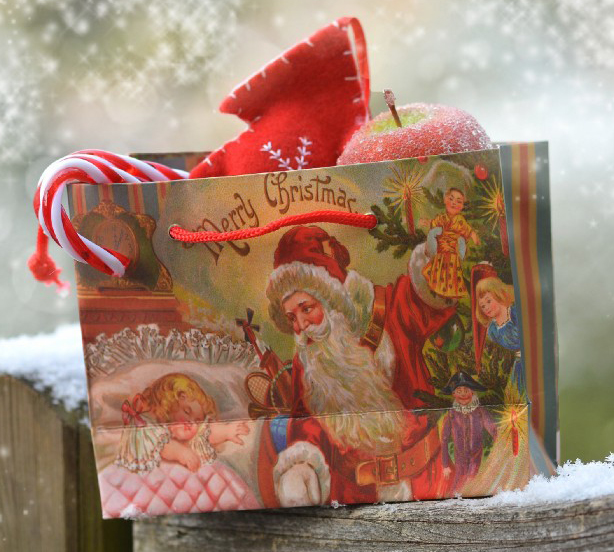
Image from Pixabay

Here I am, back again with my traditional Christmas post, because, as with all good Traditions, it has the right amount of fact while not taking itself too seriously. And after yet another year of Covid do we need a bit of not taking oneself too seriously! 

Let it raise a smile as snippets are retold over a glass of something warming and yet another mince pie.

Wishing all my readers, of this blog and of my books,
a wonderful festive season, whatever your beliefs. 


Who will be leaving gifts at your hearth? 

Here in the UK it is definitely Father Christmas who will be visiting, and despite his title he has nothing to do with Christianity, or parenthood, or even humans. It is the spirit of Mid-Winter, a personification clothed in evergreen, wrapped in holly and ivy, and garlanded in red berries and mistletoe. 

Striding in from the myths/mists of pre-history, this jovial spirit arrived at the solstice to partake in the mid-winter frivolities. The people welcomed it with entertainment, plied it with food and alcoholic beverages, and gave offerings so that it might not linger too long but instead beat smooth a path for an early spring.

Not a terrible lot changed when the Roman Legions made a home in these lands. They brought with them Saturnalia, a festival of light. Homes were garlanded with evergreen, and a good deal of partying was undertaken beneath the watchful eye of their god of agriculture, Saturn, often depicted carrying a scythe. So far so good.

Enter Christianity and a need by the early church to leverage ‘Jesus the Christ’ against entrenched Paganism. No one knew the birthdate of Jesus of Nazareth, so the Pope of the time decided Jesus should be given one. The Pagan equinox celebrations of spring and autumn had already been coveted, so why not align the day to the biggest Pagan celebration of them all? A bishop from the Middle East, recently raised to sainthood for his good works, was also pressed into action: Nicholas (more or less). In the face of such worthiness the Brits remained steadfastedly wedded to their eat, drink and make merry.
 
The Romans assimiliated or left for sunnier shores, and the Saxons and Jutes invaded from Germania, bringing along their Woden and winter’s Father Time. They also believed in eat, drink and make merry, so they fitted in quite well. 
 
A few centuries later came an invasion by the Norse and Danes (Vikings) who also believed in eat, drink and make merry (you might notice a pattern developing). They brought along their own version of Woden Odin who, during mid-winter, took on the manifestation of Jul – Yule – in that he was portly, white-bearded signifying age, had the ability to see into people’s minds and know if they’d been good or not-so-good, and rode a horse, Sleipnir, which travelled at terrifying speed due to it having eight legs. Father Christmas as we know it was beginning to coalesce.

Saint Nicholas didn’t truly put in an appearance on British shores until the islands were invaded yet again, this time in 1066 by ex-Vikings, the Normans. However, no matter how the populace was “encouraged” to be pious, once out of the church doors after celebrating Jesus’ birthday, eat, drink and make merry remained the national stance. 
 
Not even the Puritans, who in the mid-17th century took the field and the country during the English Civil War, could fully ban Christmastide – ie the eat, drink and make merry – though they certainly gave it a determined try. In retaliation, Father Christmas, as he was by then well known, made appearances in Mummer’s Plays, basically to raise a glass or an obscene gesture (or both) to the Puritan Parliament. And what happened to the Puritans? We happily waved them off to America (more or less).
 
1836 book illustration of Mummers entering a house, led by Father Christmas, and including St George and the Dragon.
A group of Mummers entering a well-to-do Victorian house, Father Christmas leading. Note his holly staff & crown, and drinker’s nose. Assorted characters in the troupe following include St George and the Dragon, England’s patron saint. Illustration, by Robert Seymour, from ‘The Book of Christmas’ by Thomas Kibble Hervey, 1836. Image in Public Domain via Wikimedia.

It was in America, after the War of Independence in the 18th century, that the populace began to embrace a certain Sinterklaas from the Dutch tradition of Saint Nicholas, doubtless because it wasn’t British (ungrateful individuals). 
 
In 1810 the New York Historical Society held a dinner in honour of Saint Nicholas, and twelve years later Clement Moore, drawing on Norse and Germanic folklore, wrote a poem A Visit from St Nicholas which was subsequently published as The Night Before Christmas. Thus Santa Claus came into his own, wearing the vestiges of Father Christmas/Jul. Even the reindeer and sled mentioned in the poem came from the Sámi people of Lapland, who the Viking peoples to the south of them firmly believed were ‘magicians’.

The Coca-Cola Company? Bah humbug! Late to the party. Santa Claus and even Father Christmas were wearing red before it showed up with its non-alcoholic beverage. But it had, and still has if its vivid red pantechnicon is anything to go by, damned good copywriters.
 
Which finally brings me to NORAD. Yes, the North American Aerospace Defence Command based in Colorado Springs. In 1955 Sears Roebuck & Company, also based in Colorado Springs, placed an advertisement in the press inviting children to phone Santa. Except the phone number was misprinted. Guess who was inundated with phone calls? CONAD – the Continental Air Defence Command and forerunner of NORAD. Despite being in the grips of the Cold War and personnel supposedly watching for in-coming missiles from you-know-where, the Defence Command put diplomacy to the fore and gave radar updates to children on the progress of Santa from the North Pole.

And thanks to the late Colonel Harry Shoup, Director of Operations at the time, it still does. Check on Santa’s progress at https://www.noradsanta.org/ Arrive before Rudolph gathers the other reindeer, visit the Elf Village where there are activities and games to keep you and your little ones enthralled.

So, wherever you are, and whatever spirit of Nature you believe in, be sure to eat, drink and make merry this festive season. It's a Tradition.


With grateful thanks to Wikipaedia, History Today, Time-Travel Britain, Museum of UnNatural Mystery, and NORAD for their assistance in producing this tongue-firmly-in-cheek blogpost.

23 December 2020

All Things Father Christmas - including Santa and NORAD

Here I am, back again with my  traditional Christmas post, because, as with all good Traditions, it has the right amount of fact while not taking itself too seriously. 

And after a year of Covid do we need a bit of not taking oneself too seriously! 

Let it raise a smile as snippets are retold over a glass of something warming and yet another mince pie.

Wishing all my readers, of this blog and of my books, a wonderful festive season, whatever your beliefs.

Who will be leaving gifts at your hearth?

Here in the UK it is definitely Father Christmas who will be visiting, and despite his title he has nothing to do with Christianity, or parenthood, or even humans. It is the spirit of Mid-Winter, a personification clothed in evergreen, wrapped in holly and ivy, and garlanded in red berries and mistletoe. It is a jovial spirit, come at the solstice to partake in the mid-winter’s frivolities. The people welcomed it with entertainment, plied it with food and alcoholic beverages, and gave offerings so that it might not linger too long but instead beat smooth a path for an early spring.

Not a terrible lot changed when the Roman Legions made a home in these lands. They brought with them Saturnalia, a festival of light accompanied by a good deal of partying under the watchful eye of the god Saturn, often depicted with a scythe. So far so good.

Enter Christianity and a need by the early church to leverage ‘Jesus the Christ’ against entrenched Paganism. No one knew Jesus’ birth date, so the Pope of the time decided Jesus should be given one. The Pagan equinox celebrations of spring and autumn had already been coveted, so why not align the day to the biggest celebration of them all? A bishop from the Middle East, recently raised to sainthood for his good works, was also pressed into action: Nicholas (more or less). In the face of such worthiness the Brits remained steadfastedly wedded to their eat, drink and make merry.
 
The Romans assimiliated or left, and the Saxons and Jutes invaded, bringing along their Woden and winter’s Father Time. They also believed in eat, drink and make merry. A later invasion by the Norse and Danes (Vikings) – who also believed in eat, drink and make merry (can you see a pattern developing?) – brought along their Odin, who during mid-winter took on the manifestation of Jul – Yule – in that he was portly, white-bearded (signifying age), had the ability to see into people’s minds and know if they’d been good or not-so-good, and rode a horse, Sleipnir, which travelled at terrifying speed due to it having eight legs. Father Christmas as we know it was beginning to coalesce.

Saint Nicholas didn’t truly put in an appearance on British shores until the islands were invaded yet again, this time in 1066 by ex-Vikings, the Normans. However, no matter how the populace was “encouraged” to be pious, once out of the church doors after celebrating Jesus’ birthday, eat, drink and make merry remained the national stance. Not even the Puritans, who in the mid-17th century took the field and the country during the English Civil War, could fully ban Christmastide – ie the eat, drink and make merry – and Father Christmas, as he was by then known, made appearances in Mummer’s Plays, basically to raise a glass [ie two fingers] to the Puritan Parliament. And what happened to the Puritans? We happily waved them off to America (more or less).

It was there, after the War of Independence in the 18th century, that the populace began to embrace a Sinter Klaas from the Dutch tradition, doubtless because it wasn’t English (ungrateful individuals). In 1810 the New York Historical Society held a dinner in honour of Saint Nicholas, and twelve years later Clement Moore, drawing on Norse and Germanic folklore, wrote a poem A Visit from St Nicholas which was subsequently published as The Night Before Christmas. Thus Santa Claus came into his own, wearing the vestiges of Father Christmas/Jul. Even the reindeer and sled mentioned in the poem came from the Sammi people of Lapland, who the Viking peoples to the south of them firmly believed were ‘magicians’.

The Coca-Cola Company? Bah humbug! Late to the party. Santa Claus and even Father Christmas were wearing red before it showed up with its non-alcoholic beverage. But it had, and still has if its vivid red pantechnicon is anything to go by, damned good copywriters.
 
Which finally brings me to NORAD. Yes, I do mean the North American Aerospace Defence Command based in Colorado Springs. In 1955 Sears Roebuck & Company, also based in Colorado Springs, placed an advertisement in the press inviting children to phone Santa. Except the phone number was misprinted. Guess who was inundated with phone calls? CONAD – the Continental Air Defence Command and forerunner of NORAD. Despite being in the grips of the Cold War and it supposedly watching for in-coming missiles from you-know-where, the Defence Command put diplomacy to the fore and gave radar updates to children on the progress of Santa from the North Pole.

And thanks to the late Colonel Harry Shoup, Director of Operations at the time, it still does. Check on Santa’s progress at https://www.noradsanta.org/ Arrive before Rudolph gathers the other reindeer and there are activities and games to keep you enthralled. Yes, honest. [Aren't these people supposed to be protecting the Western World??]

So wherever you are, and whatever spirit of Nature you believe in, be sure to eat, drink and make merry this festive season.


With grateful thanks to Wikipaedia, History Today, Time-Travel Britain, Museum of UnNatural Mystery, and NORAD for their assistance in producing this tongue-firmly-in-cheek blogpost.

24 December 2019

All Things Father Christmas, including Santa and NORAD

Here I am, back again, with my  traditional Christmas article, because, as with all good Traditions, it has the right amount of fact while not taking itself too seriously.

Let it raise a smile as snippets are retold over a glass of something warming and yet another mince pie.

Wishing all my readers, of this blog and of my books, a wonderful festive season, whatever your beliefs.


Who will be dropping gifts at your hearth? Or will it be you leaving them? 

Here in the UK it is definitely Father Christmas who will be visiting, and despite his title he has nothing to do with Christianity, or parenthood, or even humans. It is the spirit of Mid-Winter, a personification clothed in evergreen, wrapped in holly and ivy, and garlanded in red berries and mistletoe. It is a jovial spirit, come at the solstice to partake in the mid-winter’s frivolities. The people welcomed it with entertainment, plied it with food and alcoholic beverages, and gave offerings so that it might not linger too long but instead beat smooth a path for an early spring.

Not a terrible lot changed when the Roman Legions made a home in these lands. They brought with them Saturnalia, a festival of light accompanied by a good deal of partying under the watchful eye of the god Saturn, often depicted with a scythe. So far so good.

Enter Christianity and a need by the early church to leverage ‘Jesus the Christ’ against entrenched Paganism. No one knew Jesus’ birth date, so the Pope of the time decided Jesus should be given one. The Pagan equinox celebrations of spring and autumn had already been coveted, so why not align the day to the biggest celebration of them all? A bishop from the Middle East, recently raised to sainthood for his good works, was also pressed into action: Nicholas (more or less). In the face of such worthiness the Brits remained steadfastedly wedded to their eat, drink and make merry.

The Romans assimiliated or left, and the Saxons and Jutes invaded, bringing along their Woden and winter’s Father Time. They also believed in eat, drink and make merry. A later invasion by the Norse and Danes (Vikings) – who also believed in eat, drink and make merry (can you see a pattern developing?) – brought along their Odin, who during mid-winter took on the manifestation of Jul – Yule – in that he was portly, white-bearded (signifying age), had the ability to see into people’s minds and know if they’d been good or not-so-good, and rode a horse, Sleipnir, which travelled at terrifying speed due to it having eight legs. Father Christmas as we know it was beginning to coalesce.

Saint Nicholas didn’t truly put in an appearance on British shores until the islands were invaded yet again, this time in 1066 by ex-Vikings, the Normans. However, no matter how the populace was “encouraged” to be pious, once out of the church doors after celebrating Jesus’ birthday, eat, drink and make merry remained the national stance. Not even the Puritans, who in the mid-17th century took the field and the country during the English Civil War, could fully ban Christmastide – ie the eat, drink and make merry – and Father Christmas, as he was by then known, made appearances in Mummer’s Plays, basically to raise a glass [ie two fingers] to the Puritan Parliament. And what happened to the Puritans? We happily waved them off to America (more or less).

It was there, after the War of Independence in the 18th century, that the populace began to embrace a Sinter Klaas from the Dutch tradition, doubtless because it wasn’t English (ungrateful individuals). In 1810 the New York Historical Society held a dinner in honour of Saint Nicholas, and twelve years later Clement Moore, drawing on Norse and Germanic folklore, wrote a poem A Visit from St Nicholas which was subsequently published as The Night Before Christmas. Thus Santa Claus came into his own, wearing the vestiges of Father Christmas/Jul. Even the reindeer and sled mentioned in the poem came from the Sammi people of Lapland, who the Viking peoples to the south of them firmly believed were ‘magicians’.

The Coca-Cola Company? Bah humbug! Late to the party. Santa Claus and even Father Christmas were wearing red before it showed up with its non-alcoholic beverage. But it had, and still has if its vivid red pantechnicon is anything to go by, damned good copywriters.

Which finally brings me to NORAD. Yes, I do mean the North American Aerospace Defence Command based in Colorado Springs. In 1955 Sears Roebuck & Company, also based in Colorado Springs, placed an advertisement in the press inviting children to phone Santa. Except the phone number was misprinted. Guess who was inundated with phone calls? CONAD – the Continental Air Defence Command and forerunner of NORAD. Despite being in the grips of the Cold War and it supposedly watching for in-coming missiles from you-know-where, the Defence Command put diplomacy to the fore and gave radar updates to children on the progress of Santa from the North Pole.

And thanks to the late Colonel Harry Shoup, Director of Operations at the time, it still does. Check on Santa’s progress at https://www.noradsanta.org/
 
So wherever you are, and whatever spirit of Nature you believe in, be sure to eat, drink and make merry this festive season.


With grateful thanks to Wikipaedia, History Today, Time-Travel Britain, Museum of UnNatural Mystery, and NORAD for their assistance in producing this tongue-firmly-in-cheek blogpost.
22 December 2018

All Things Father Christmas, including Santa and NORAD

Here I am, back again, with the third year of running this article. It has definitely become a tradition, because, as with all good Traditions, it has the right amount of fact while not taking itself too seriously.

Let it raise a smile as snippets are retold over a glass of something warming and yet another mince pie.

Wishing all my readers, of this blog and of my books, a wonderful festive season, whatever your beliefs.


Who will be dropping gifts at your hearth? Or will it be you leaving them? 

Here in the UK it is definitely Father Christmas who will be visiting, and despite his title he has nothing to do with Christianity, or parenthood, or even humans. It is the spirit of Mid-Winter, a personification clothed in evergreen, wrapped in holly and ivy, and garlanded in red berries and mistletoe. It is a jovial spirit, come at the solstice to partake in the mid-winter’s frivolities. The people welcomed it with entertainment, plied it with food and alcoholic beverages, and gave offerings so that it might not linger too long but instead beat smooth a path for an early spring.

Not a terrible lot changed when the Roman Legions made a home in these lands. They brought with them Saturnalia, a festival of light accompanied by a good deal of partying under the watchful eye of the god Saturn, often depicted with a scythe. So far so good.

Enter Christianity and a need by the early church to leverage ‘Jesus the Christ’ against entrenched Paganism. No one knew Jesus’ birth date, so the Pope of the time decided Jesus should be given one. The Pagan equinox celebrations of spring and autumn had already been coveted, so why not align the day to the biggest celebration of them all? A bishop from the Middle East, recently raised to sainthood for his good works, was also pressed into action: Nicholas (more or less). In the face of such worthiness the Brits remained steadfastedly wedded to their eat, drink and make merry.

The Romans assimiliated or left, and the Saxons and Jutes invaded, bringing along their Woden and winter’s Father Time. They also believed in eat, drink and make merry. A later invasion by the Norse and Danes (Vikings) – who also believed in eat, drink and make merry (can you see a pattern developing?) – brought along their Odin, who during mid-winter took on the manifestation of Jul – Yule – in that he was portly, white-bearded (signifying age), had the ability to see into people’s minds and know if they’d been good or not-so-good, and rode a horse, Sleipnir, which travelled at terrifying speed due to it having eight legs. Father Christmas as we know it was beginning to coalesce.

Saint Nicholas didn’t truly put in an appearance on British shores until the islands were invaded yet again, this time in 1066 by ex-Vikings, the Normans. However, no matter how the populace was “encouraged” to be pious, once out of the church doors after celebrating Jesus’ birthday, eat, drink and make merry remained the national stance. Not even the Puritans, who in the mid-17th century took the field and the country during the English Civil War, could fully ban Christmastide – ie the eat, drink and make merry – and Father Christmas, as he was by then known, made appearances in Mummer’s Plays, basically to raise a glass [ie two fingers] to the Puritan Parliament. And what happened to the Puritans? We happily waved them off to America (more or less).

It was there, after the War of Independence in the 18th century, that the populace began to embrace a Sinter Klaas from the Dutch tradition, doubtless because it wasn’t English (ungrateful individuals). In 1810 the New York Historical Society held a dinner in honour of Saint Nicholas, and twelve years later Clement Moore, drawing on Norse and Germanic folklore, wrote a poem A Visit from St Nicholas which was subsequently published as The Night Before Christmas. Thus Santa Claus came into his own, wearing the vestiges of Father Christmas/Jul. Even the reindeer and sled mentioned in the poem come from the Sammi people of Lapland, who the Viking peoples to the south of them firmly believed were ‘magicians’.

The Coca-Cola Company? Bah humbug! Late to the party. Santa Claus and even Father Christmas were wearing red before it showed up with its non-alcoholic beverage. But it had, and still has if its vivid red pantechnicon is anything to go by, damned good copywriters.

Which finally brings me to NORAD. Yes, I do mean the North American Aerospace Defence Command based in Colorado Springs. In 1955 Sears Roebuck & Company, also based in Colorado Springs, placed an advertisement in the press inviting children to phone Santa. Except the phone number was misprinted. Guess who was inundated with phone calls? CONAD – the Continental Air Defence Command and forerunner of NORAD. Despite being in the grips of the Cold War and it supposedly watching for in-coming missiles from you-know-where, the Defence Command put diplomacy to the fore and gave radar updates to children on the progress of Santa from the North Pole.

And thanks to the late Colonel Harry Shoup, Director of Operations at the time, it still does. Come the Big Day, check on Santa’s progress at http://www.noradsanta.org/
 
So wherever you are, and whatever spirit of Nature you believe in, be sure to eat, drink and make merry this festive season.

With grateful thanks to Wikipaedia, History Today, Time-Travel Britain, Museum of UnNatural Mystery, and NORAD for their assistance in producing this tongue-firmly-in-cheek blogpost.

10 February 2018

How Historical Should Be Your Historical?

I have been following an earnest debate in a Facebook group regarding how close to factual history Historical novels should stay.

On the one side there’s the fiction is never fact and shouldn’t be taken as such. On the other there’s the fiction should stick to the fact until the fact gets in the way of the fiction. And a lot of differing views threading in, around and between.

My stance is that authors have to be true to themselves and their prospective readers, as far as their publishers will allow.

I’ve never wanted to write about historical figures, or even historical events. I’m much more interested in how ordinary people lived their lives in what we might call a historical era, but that certainly doesn’t mean that I can make it up as I go. Just as modern London can’t be set in modern Poland for the sake of a fictional story, named places that existed as historical fact both have to be set in their true place and have an authenticity to them corresponding to the stated date. And not just in looks or smell.

I remember being in a cinema watching Robin Hood, Prince of Thieves. RH (Kevin Costner) had just landed on English sands below the unmistakeable white cliffs of the country's southern shore when he uttered words to the effect of: Tonight I will dine at my father’s table – ie in Nottingham. The  cinema erupted in gales of laughter, with someone behind me quipping, ‘Got a helicopter waiting on the cliff-top, has he?’ And that was it for the film. The suspension of disbelief had been well and truly trashed, the audience more intent on chortling over the succession of gaffes than concentrating on the story.

Cinema-goers do that. Readers don’t. They throw the offending novel at a wall, give it a one-star review for wasting their time, and never read that author again. So novelists play fast and loose with history at their peril, while Hollywood adds the euphemism Based on... and runs all the way to the bank, massacring History as it goes.

Yet every Historical novel is also based on… people, events, places, eras, that once existed. History – the factual History we novelists take as primary or secondary source material – is based on… documents that are based on… hearsay or, if we’re lucky, eye-witness accounts, transcribed bytranslated from… and we would be foolish not to accept that everyone along that line is relating facts as they saw them, or was instructed to see them. Truth, after all, is a many-faceted light in the darkness.

This is one of the reasons historical novelists add a Historical Note to the back of their  books, gently separating the history from the fiction for interested readers. You’ll find one in each of the Torc of Moonlight trilogy, to both separate and dovetail the past and the present storylines.

But there’s not one added to Beneath The Shining Mountains, a true based on… the remembrance of a then old woman, translated to an American ethnographer to be set down in a foreign tongue, doubtless edited for understanding, and doubtless edited again two generations later for a thin volume of “tales” from a people who lived yet whose life had perished, her story re-envisioned by me with the help of a wide range of secondary sources that might, or might not, have been as historically accurate as maintained.

How historical is your Historical?

Mine? I do my best. In the end its all any novelist can do. We’ve just got to ensure that we do it.

23 December 2017

All Things Father Christmas, Including Santa and NORAD

I've decided to let this become a tradition, because, as with all good Traditions, it has the right amount of fact while not taking itself too seriously.

The article was written by me for Christmas 2016, but remains an evergreen to raise a smile, and snippets can be retold over a glass of something warming and yet another mince pie.
Wishing all my readers, of this blog and of my books, a wonderful festive season, whatever your beliefs...
Who will be dropping gifts at your hearth? Or will it be you leaving them?
Here in the UK it is definitely Father Christmas who will be visiting, and despite his title he has nothing to do with Christianity, or parenthood, or even humans. It is the spirit of Mid-Winter, a personification clothed in evergreen, wrapped in holly and ivy, and garlanded in red berries and mistletoe. It is a jovial spirit, come at the solstice to partake in the mid-winter’s frivolities. The people welcomed it with entertainment, plied it with food and alcoholic beverages, and gave offerings so that it might not linger too long but instead beat smooth a path for an early spring. 
Not a terrible lot changed when the Roman Legions made a home in these lands. They brought with them Saturnalia, a festival of light accompanied by a good deal of partying under the watchful eye of the god Saturn, often depicted with a scythe. So far so good.

Enter Christianity and a need by the early church to leverage ‘Jesus the Christ’ against entrenched Paganism. No one knew Jesus’ birth date, so the Pope of the time decided Jesus should be given one. The Pagan equinox celebrations of spring and autumn had already been coveted, so why not align the day to the biggest celebration of them all? A bishop from the Middle East, recently raised to sainthood for his good works, was also pressed into action: Nicholas (more or less). In the face of such worthiness the Brits remained steadfastedly wedded to their eat, drink and make merry.

The Romans assimiliated or left, and the Saxons and Jutes invaded, bringing along their Woden and winter’s Father Time. They also believed in eat, drink and make merry. A later invasion by the Norse and Danes (Vikings) – who also believed in eat, drink and make merry (can you see a pattern developing?) – brought along their Odin, who during mid-winter took on the manifestation of Jul – Yule – in that he was portly, white-bearded (signifying age), had the ability to see into people’s minds and know if they’d been good or not-so-good, and rode a horse, Sleipnir, which travelled at terrifying speed due to it having eight legs. Father Christmas as we know it was beginning to coalesce.

Saint Nicholas didn’t truly put in an appearance on British shores until the islands were invaded yet again, this time in 1066 by ex-Vikings, the Normans. However, no matter how the populace was “encouraged” to be pious, once out of the church doors after celebrating Jesus’ birthday, eat, drink and make merry remained the national stance. Not even the Puritans, who in the mid-17th century took the field and the country during the English Civil War, could fully ban Christmastide – ie the eat, drink and make merry – and Father Christmas, as he was by then known, made appearances in Mummer’s Plays, basically to raise a glass [ie two fingers] to the Puritan Parliament. And what happened to the Puritans? We happily waved them off to America (more or less).

It was there, after the War of Independence in the 18th century, that the populace began to embrace a Sinter Klaas from the Dutch tradition, doubtless because it wasn’t English (ungrateful individuals). In 1810 the New York Historical Society held a dinner in honour of Saint Nicholas, and twelve years later Clement Moore, drawing on Norse and Germanic folklore, wrote a poem A Visit from St Nicholas which was subsequently published as The Night Before Christmas. Thus Santa Claus came into his own, wearing the vestiges of Father Christmas/Jul. Even the reindeer and sled mentioned in the poem come from the Sammi people of Lapland, who the Viking peoples to the south of them firmly believed were ‘magicians’.

The Coca-Cola Company? Bah humbug! Late to the party. Santa Claus and even Father Christmas were wearing red before it showed up with its non-alcoholic beverage. But it had, and still has if its vivid red pantechnicon is anything to go by, damned good copywriters.

Which finally brings me to NORAD. Yes, I do mean the North American Aerospace Defence Command based in Colorado Springs. In 1955 Sears Roebuck & Company, also based in Colorado Springs, placed an advertisement in the press inviting children to phone Santa. Except the phone number was misprinted. Guess who was inundated with phone calls? CONAD – the Continental Air Defence Command and forerunner of NORAD. Despite being in the grips of the Cold War and it supposedly watching for in-coming missiles from you-know-who, the Defence Command put diplomacy to the fore and gave radar updates to children on the progress of Santa from the North Pole.

And thanks to the late Colonel Harry Shoup, Director of Operations at the time, it still does. Come the Big Day, check on Santa’s progress at http://www.noradsanta.org/
So wherever you are, and whatever spirit of Nature you believe in, be sure to eat, drink and make merry this festive season.
With grateful thanks to Wikipaedia, History Today, Time-Travel Britain, Museum of UnNatural Mystery, and NORAD for their assistance in producing this tongue-firmly-in-cheek blogpost.

25 November 2017

Boxed Set Trilogy now on Pre-Order

After hours of fun last week, the digital boxed set of the three Torc of Moonlight novels is finally available for pre-order - launching 8th December.

The novels concern the resurrection of a Celtic water deity in an area of what is now the North York Moors in England. Ritual deposits in water courses are a given in archaeology, and I use the ultimate - a sword - in Book 1 to kick off the trilogy. Yet ritual deposits are not simply something of far off history; they continue to this day. Have you never tossed coins into water hoping for 'good luck'? 

If you live in the UK and stand still long enough to consider your own surroundings, you'll find it uncannily easy to discover echoes of water worship close by. I live on the coast in East Yorkshire. Within a few miles, in one village there is a Bugg Lane leading to a quintessential village duck pond - Bugg, like Boggle, is an old word for ghost or apparition - while in another village the written history mentions remembered folklore of a White Lady appearing by the local spring-head. 

Is there a medieval Christian church in your vicinity named All Saints or All Souls? Their dedicated feast days are 1st and 2nd November, All Hallows Eve, a time of vigil, being 31st October. Close by there will be, or will have been, a community water source used for autumnal divination rites as well as everyday drinking. Their pre-Christian deities, demonised so long ago, give us modern Halloween. Even the celebrated summer Well Dressings in parts of Derbyshire and Staffordshire, now a tourist industry of its own, cannot truly camouflage their ancient origins.

History is mere inches beneath our feet, and the flow of water is used as the flow of time in these contemporary novels:
Book 1: Torc Of Moonlight - set in Hull with a Celtic resonance
Book 2: The Bull At The Gate - set in York with a Roman resonance
Book 3: Pilgrims Of The Pool - set in Durham with a Mediaeval resonance

Read more about the individual novels here, or on the trilogy's retailer pages:

Kindle  ¦  iBooks  ¦  Nook  ¦  Kobo  ¦  All formats

4 November 2017

Gunpowder, Treason and Plot

Gunpowder Conspirators - from a print published after the discovery
England has never really gone in for anarchy and revolution to the extent of some other countries, but it has had its near misses. The one still recalled, and celebrated as "Bonfire Night" or "Guy Fawkes Night", is the attempt in 1605.

The plan was to destroy the House of Lords during the state opening of Parliament, thus murdering the leading members of the English aristocracy and assassinating King James I and his family. This was to be expedited by exploding 36 barrels of gunpowder secreted in the building’s undercroft. Guy Fawkes, known at Guido Fawkes or by the alias John Johnson, was the man found waiting to light the fuse, though certainly he was not one of the ringleaders.

Revolution tends to brew for a long time. The Protestant Reformation had been gathering pace in Europe for nearly a 100 years. In England, in a long-running spat with the Catholic Church in Rome, in 1526 King Henry VIII declared the country would abide with the newly-created Protestant Church of England, himself at its head. After his death, his daughter Queen Mary I briefly returned the country to the sort of Catholicism that burnt 300 churchmen at the stake as heretics. Henry’s second daughter, Protestant Queen Elizabeth I, had to cope with the fallout, both at home and abroad. These included several attempts on her life instigated by her excommunication by the Pope, and culminated in the infamous Armada sent by Spain in 1588 to invade, conquer, and return England to Catholicism. State sponsored terrorism is nothing new.

In this light, when the heir-less Elizabeth died in 1603, and the throne was passed to Protestant King James I of England and VI of Scotland, there is little wonder that the country’s burgeoning secret service was keeping an eye on dissenters at home and fomenters abroad. Mirroring today, it knew something was afoot, but it took a letter warning a Catholic member of the aristocracy not to attend the opening of Parliament to pull the threads together. Guy Fawkes was caught red-handed, and the murder-intent dissenters either died in the fight to apprehend them, or, like Fawkes, were taken prisoner, tried, found guilty of treason, and hanged, drawn and quartered on 31 January 1606. Subsequently, 5th November was proclaimed a Day of Thanksgiving ‘for the joyful deliverance’ by an Act of Parliament which was not repealed until 1859.

Currently, the BBC is running a dramatisation mini-series, Gunpowder, which evokes well the period, the animosities and the obsessions. If you are reading in the USA, keep an eye on the schedules for BBC America.

The way the British, at least the English, celebrate Guy Fawkes Night or Bonfire Night, has changed in my lifetime. When I was a child it was taken very seriously by local children. Bonfire fuel was collected during the preceding week, a ‘guy’ was constructed from old trousers and a shirt stuffed with newspapers and given a hat, to be taken door to door on a bogey, a form of home-made go-cart, to elicit funds for fireworks: Penny for the Guy! 

4th November was Mischief Night, when the same youths would lift gates from hinges of households they deemed hadn’t coughed up sufficiently, doors would be knocked on and an escape made before the owners answered, and so on, though few would have equated such annoying pranks with the mischief the Gunpowder conspirators enacted four centuries before. 

The excitement of a sparkler


During the evening of 5th November most family gardens held a small bonfire party, with hand-held sparklers and a box of fireworks, and everyone watched the neighbours’ rockets light the sky as they munched on potatoes baked in the embers of their own fire, alongside treats such as Yorkshire parkin and gingerbread.

It is interesting to note - see my last blogpost - that the Celtic end-of-year festival, Samhain, would still be in evidence in the 17th century, when breeding cattle saved from the autumn slaughter were driven through the dark smoke of bone-fires to help cleanse them of parasites. Perhaps the government had more than one reason to create an Act of Parliament setting the 5th November celebration among the statutes.


The need for Health & Safety regulations!

5th November celebrations are now a faint echo of what they once were. Thanks to the rise of Health & Safety regulations, and the sheer cost of fireworks, most people attend organised firework displays where political correctness frowns on an effigy being burned on the bonfire – if there is a bonfire. And perhaps that is as it should be. 

Mischief Night, too, is a near-forgotten tradition, or more likely merged into the Americanised version of Halloween now so prominent, complete with that foreign fruit, the pumpkin. What would the Conspirators have made of that?

Remember! Remember!
The 5th of November
Gunpowder, treason and plot.
I know of no reason
Why the Gunpowder treason
Should ever be forgot.


Note: The rhyme is part of a 19th century folk verse.
Photographs are courtesy of Creative Commons CC0 Licenses